
Microsoft is rolling out significant changes to Microsoft 365 licensing, pricing, and bundles in 2026. These updates represent the most impactful shifts since the New Commerce Experience (NCE) launched and will affect how organizations manage renewals, control costs, and evaluate licensing strategies. Below is a clear, practical overview of what’s changing — and what it means for your organization.
Key Takeaways at a Glance
If you’re short on time, here are the most important points to know:
- Disabling auto-renewal will no longer prevent renewal-related costs after April 1.
- Microsoft 365 price increases take effect for renewals on or after July 1.
- Microsoft is enhancing and restructuring several licensing bundles.
- New Microsoft 365 Copilot bundles for Business customers offer lower pricing.
- License management and renewal planning will be more critical than ever.
Subscription Renewals and Grace Period Changes
End of Grace Periods
Historically, Microsoft allowed roughly a 30-day grace period after subscription expiration to give organizations time to renew or transition services. Beginning April 1, those grace periods will no longer apply.
At the end of a subscription term, customers will have three options:
- Renew the subscription
Auto-renewal continues without interruption. - Cancel the subscription
The subscription ends immediately at expiration, and services stop. - Disable auto-renewal (Extended Service Time)
Disabling auto-renewal now triggers enrollment in Extended Service Time (EST) rather than preventing renewal.
What Is Extended Service Time (EST)?
If auto-renewal is disabled, the subscription will automatically move into EST at expiration:
- Pricing increases to month-to-month rates with a 3% uplift:
- 23% higher than annual prepaid MSRP
- 18% higher than annual commitments paid monthly
- License counts cannot be increased or decreased during EST
- Subscriptions can be canceled at any time and are billed on a prorated basis
Bottom line:
Disabling auto-renewal no longer avoids renewal costs, it often increases them.
Microsoft 365 Price Increases Effective July 1
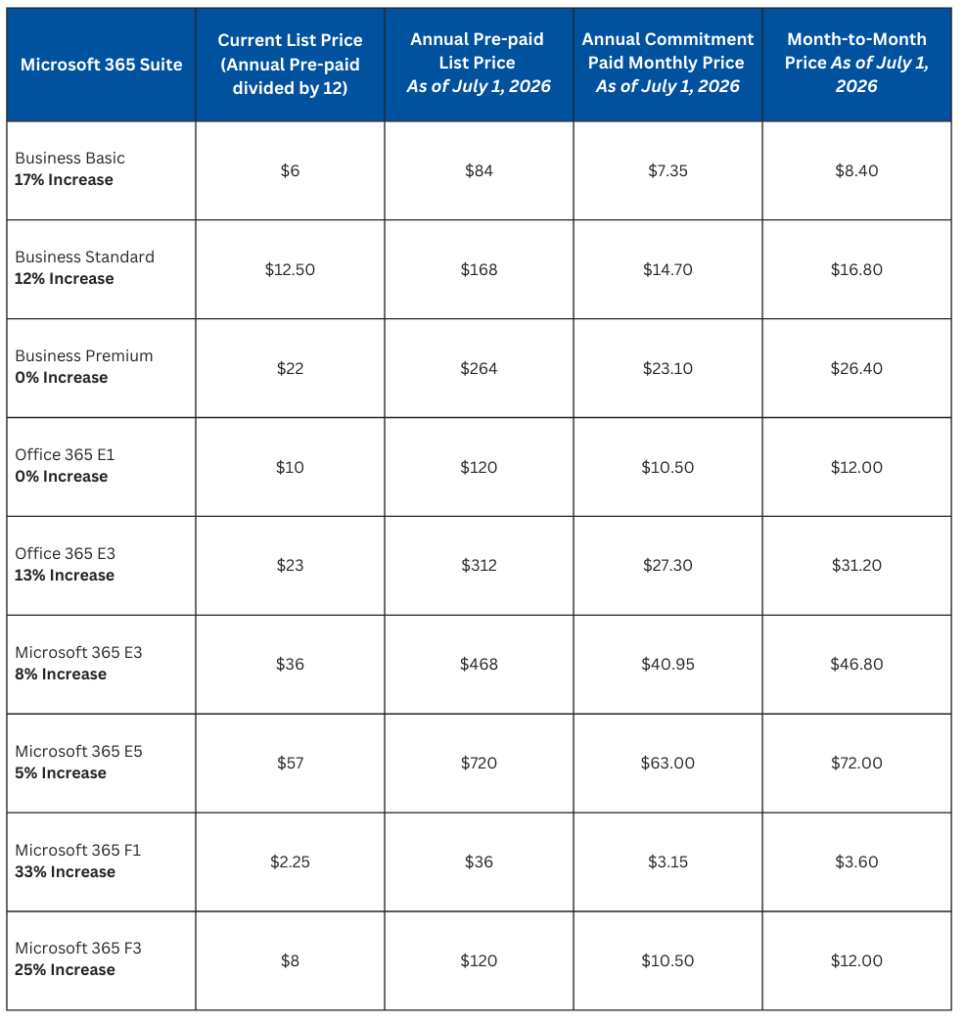
Microsoft has announced pricing updates for subscriptions renewing on or after July 1, 2026. The following tables outline the changes for commonly used plans.
Commercial Microsoft 365 Pricing Changes
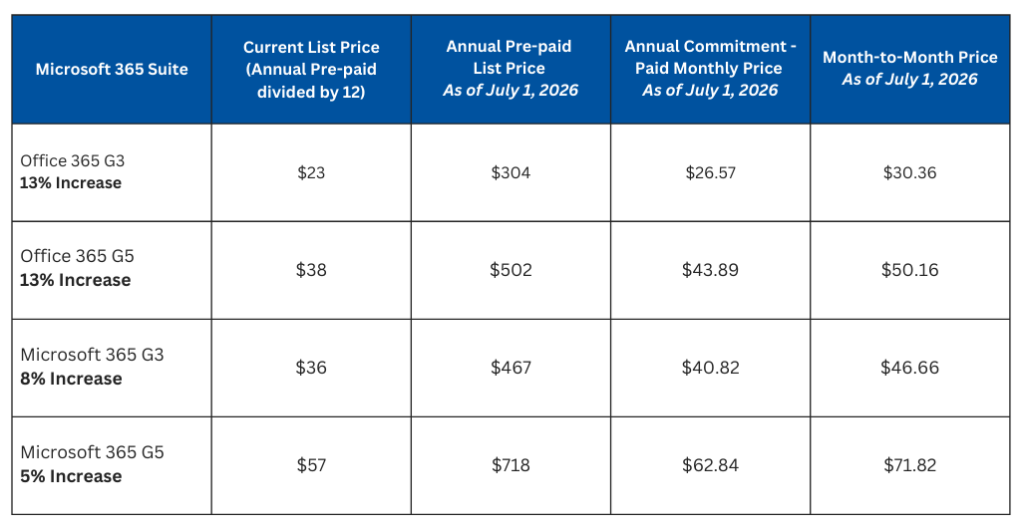
Government Licensing Pricing Changes
Due to contract limitations, government pricing increases are capped at 10% annually, with some adjustments continuing into 2027.
Non-Profit Licensing Pricing Changes
Nonprofit pricing will increase by the same percentage as commercial licenses, but Microsoft’s existing nonprofit discounts will remain in place, continuing to provide substantially reduced pricing. Specific discounted amounts vary by license and eligibility.
Changes to Microsoft 365 Bundles
Microsoft is also increasing the value of several licensing bundles by adding features and expanding storage.
Business Plan Enhancements
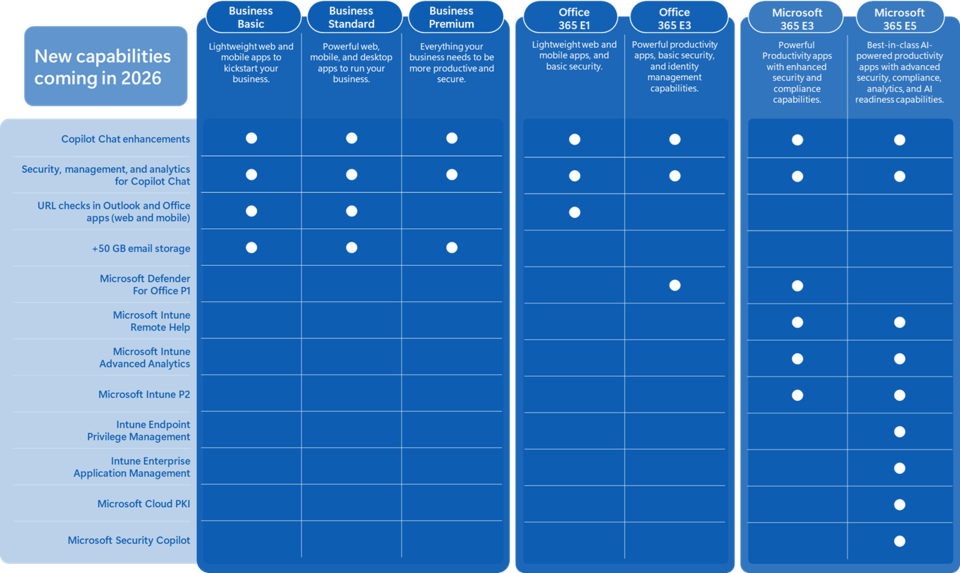
Effective July 1, Microsoft 365 Business Basic, Standard, and Premium will all increase mailbox storage from 50 GB to 100 GB, aligning them with Enterprise plans.
Enterprise Plan Enhancements
- Office 365 E3
Defender for Office Plan 1 will be added. - Microsoft 365 E3
Defender for Office Plan 1 and Intune Plan 2 will be added. - Microsoft 365 E5
Includes Defender for Office Plan 1, Intune Plan 2, Intune Endpoint & Application Management, and Microsoft Security Copilot.
These enhancements are designed to improve security and device management capabilities without requiring add-on licenses.
Summary Table of Package Changes:
Evaluating the Opportunity for Business Premium
Microsoft 365 Business Premium continues to stand out as one of the strongest value options in the Microsoft portfolio. With built-in security, identity management, device control, and Office applications, the expanded bundle narrows the gap between Business and Enterprise plans for many organizations.
For companies under the 300-user limit, Business Premium can often deliver enterprise-grade capabilities at a lower cost and with simpler licensing.
New Microsoft 365 Copilot Options for Business Customers
Microsoft has introduced new Copilot offerings specifically for Business plans.
Microsoft 365 Copilot Business
Launched in December, this version of Copilot is designed for Microsoft 365 Business customers and is priced approximately 30% lower than the enterprise Copilot offering:
- $22.05/user/month with an annual commitment
- Standard Copilot pricing: $31.50/user/month
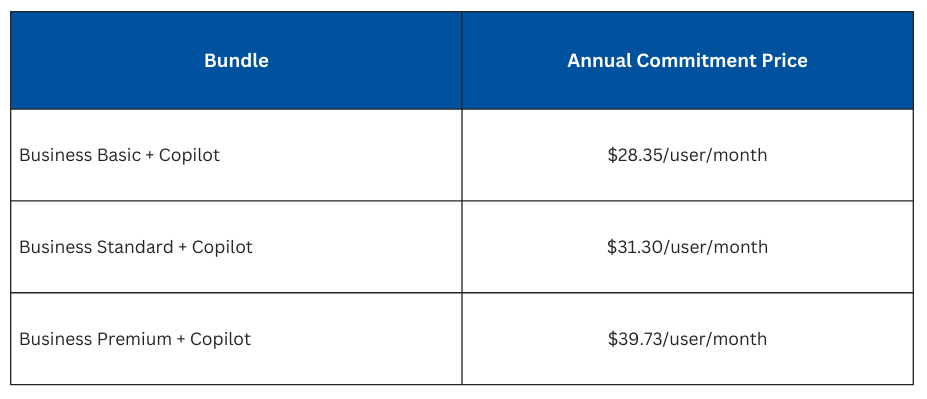
Copilot Business Bundles
Copilot can also be bundled with Business licenses for additional savings.
Promotional Offers
Select Microsoft 365 Copilot Business and Purview offerings include promotional discounts through 3/31/26, with savings from 15% to 35% for the first year.
Final Thoughts
Microsoft’s 2026 licensing updates introduce higher costs, tighter renewal rules, and expanded bundle value. For many organizations, these changes create an opportunity to reassess licensing strategies, consolidate plans, and ensure subscriptions align with real business needs.Proactive planning, especially around renewals and auto-renewal settings, will be critical to avoiding unnecessary cost increases and service disruptions.
If you’d like help reviewing your Microsoft 365 licensing or understanding how these changes affect your organization, Mirazon’s consulting team, a trusted Microsoft partner for years, can help ensure you’re positioned for both cost control and long-term success.